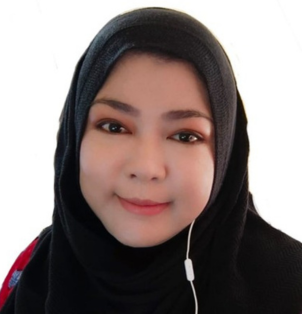
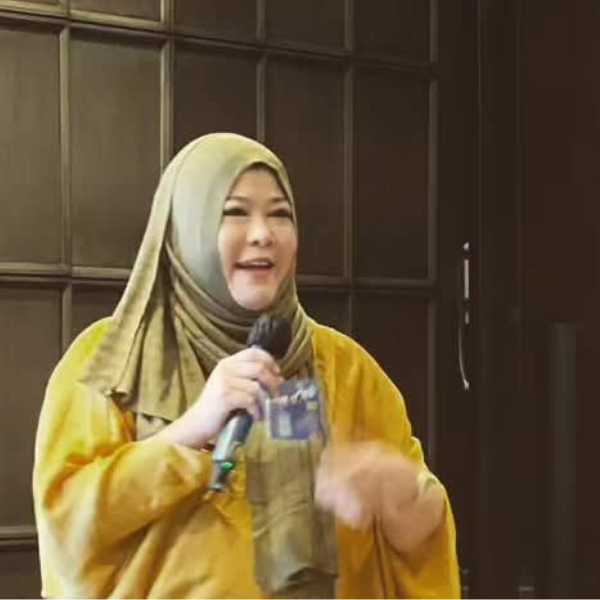
Anita Sabidi
A passionate type 1 diabetes advocate, Indonesia
Edited: 27.08.2026

When type 1 diabetes entered my life, I was still a girl learning who I was. In a culture where health conversations often center on adults, being diagnosed as a teenage girl felt confusing and isolating. I didn’t know anyone else my age who injected insulin, counted carbohydrates, or fainted when their blood sugar dropped.
In Indonesia, diabetes is usually seen as a disease of the elderly. So when people learned about my diagnosis, they reacted with disbelief. “You’re too young for that,” they said, or worse, “Maybe you ate too much sugar.” Few understood that type 1 diabetes is an autoimmune condition, not a lifestyle choice.
As a girl, the changes in my body were already hard to understand. Diabetes made that even more complicated. My energy levels swung between exhaustion and restlessness. Friends talked about diets and appearances, while I was quietly calculating insulin doses and hoping no one noticed my trembling hands.
Society often expects girls to be polite, obedient, and “normal.” Being visibly different, injecting insulin, excusing myself to treat a low, or carrying snacks for emergencies, felt like breaking unspoken rules. I learned to hide my condition at school, pretending to be fine even when my body was screaming otherwise.
There was also the cultural pressure to appear “strong” and not burden others. Talking about my condition felt uncomfortable, as if admitting weakness. I carried that silence for years.
Beyond stigma, practical barriers made life harder. When I was diagnosed, glucometers were rare and expensive. I had my blood sugar checked only once a month at a clinic. For a young girl, that meant living with uncertainty, guessing how my body felt instead of knowing.
There was only limited structured diabetes education for children or their families, and almost no psychological support. I learned through trial and error, sometimes at the cost of frightening experiences with high and low blood sugar.
Adulthood didn’t erase these challenges, it added new ones. Managing diabetes while studying, working, and later becoming a mother required constant balancing. Reproductive health and pregnancy care for women with type 1 diabetes remain limited in Indonesia.
The emotional weight of being both a patient and a woman, expected to nurture others while managing my own condition, was heavy. Yet, it also gave me strength.
Over time, I realized that silence helps no one. Meeting other women with type 1 diabetes changed everything. We shared stories of fear, resilience, and small victories. Through community and advocacy, I found the courage to speak up, for equal access, for better awareness, and for the right of girls to grow up healthy, confident, and supported.
Being a girl with type 1 diabetes means growing up between two worlds : one of medical reality, and another of social expectation. But girls deserve both understanding and opportunity; to study, to dream, to become mothers if they choose, without fear or stigma.
Our stories matter because they show that diabetes is not the end of childhood or womanhood. It’s the beginning of a different kind of strength, one that turns challenges into purpose.
 Disclaimer:


UK registered charity no. 1166447
9 Parkfield Road, Taunton, Somerset
TA1 4RL, United Kingdom
admin@action4diabetes.org


 Close this window


 Back to homepage


